
Remote work has solved many challenges for modern organizations.
It allows companies to hire globally, offers employees flexibility, and often increases productivity.
But it also introduced a new problem that many teams quietly struggle with.
Zoom fatigue.
- Days filled with back-to-back virtual meetings.
- Cameras off.
- Participation minimal.
- Energy low.
Remote teams collaborate constantly, but they rarely experience moments that make them feel like a team.
And over time, that lack of connection starts to show.
Meetings Aren’t the Same as Experiences
Most remote interaction is transactional.
- Weekly updates.
- Status meetings.
- Project reviews.
- Quick check-ins.
These are necessary for work to get done, but they don’t create the kind of shared experiences that build relationships.
In physical offices, these moments often happen naturally:
- conversations in the hallway
- spontaneous laughter during lunch
- celebrating wins together
Remote teams don’t have those moments unless someone intentionally creates them.
That’s where experiences come in.
Unlike meetings, experiences are interactive, emotional, and memorable. They invite participation rather than simply requiring attendance.
And when done well, they can transform the energy of a remote team almost instantly.
Why Play Matters at Work
There’s a reason so many effective team-building activities involve elements of play.
Play lowers stress levels, increases creativity, and encourages people to engage in ways they might not during formal meetings. It also helps people see their colleagues in a different light.
- The quiet analyst becomes surprisingly competitive.
- The reserved developer turns out to be hilarious.
- Departments that rarely interact suddenly collaborate.
These moments humanize colleagues who normally exist only as Slack messages or small boxes on a screen.
For remote teams, these moments aren’t just nice to have, they’re essential.
A Remote Game Show That Changed the Energy
Recently, we worked with a fully remote team looking to create exactly that kind of moment.
Like many distributed teams, their calendars were packed with virtual meetings. People were working hard, but the sense of fun and connection that often exists in physical offices was missing.
Instead of organizing another standard virtual gathering, we created a remote game show experience.
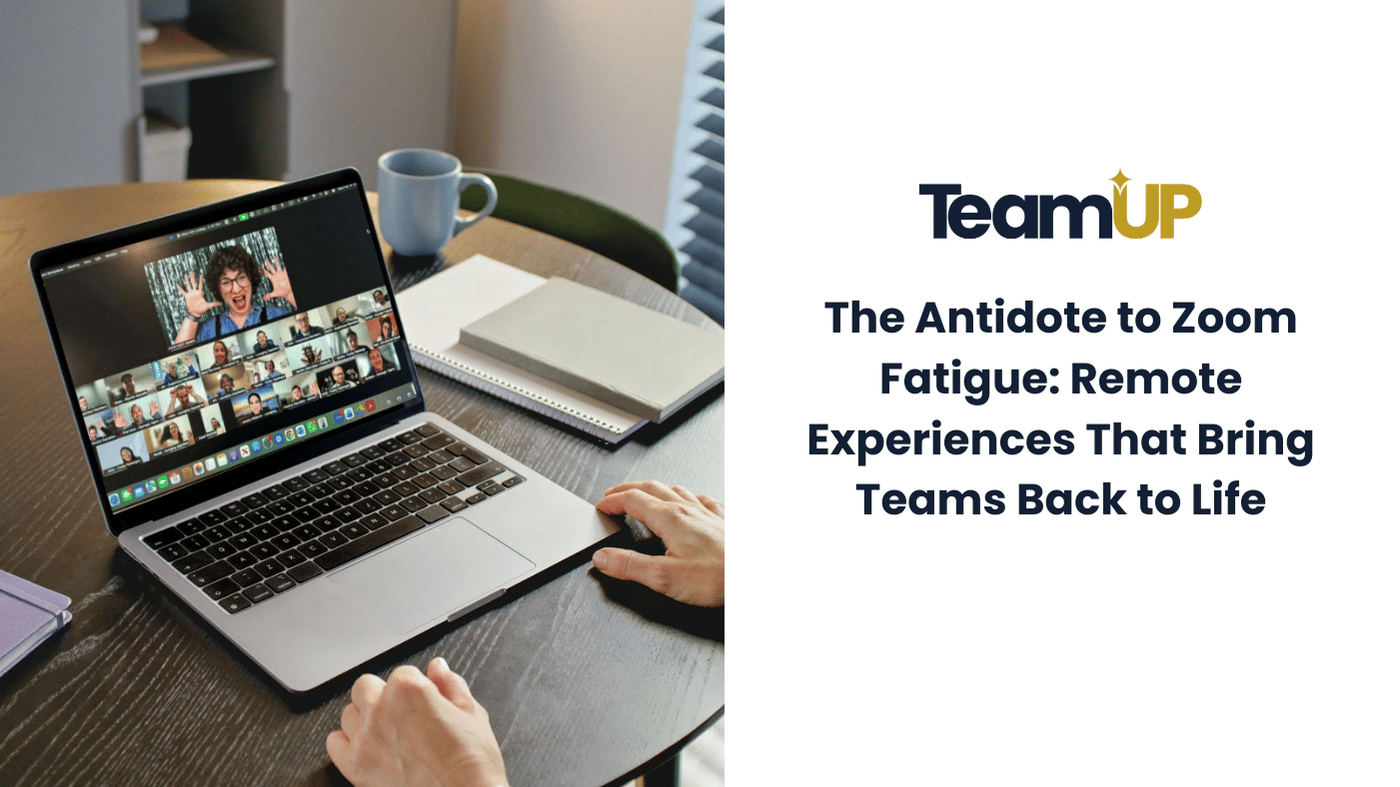
Employees joined from different cities and time zones. Instead of a presentation or workshop, they were welcomed into a lively game-show-style event where teams competed, collaborated, and answered fast-paced challenges.
Something interesting happened almost immediately.
Cameras started turning on.
The chat lit up.
People who had barely spoken in previous meetings were suddenly shouting answers, encouraging teammates, and laughing at unexpected moments.
Departments that rarely interacted were strategizing together. Colleagues discovered surprising things about one another. And for the first time in a while, the meeting didn’t feel like work.
It felt like an experience.
What Made It Work
What made the event successful wasn’t just the format. It was the way it encouraged participation, collaboration, and energy.
The structure allowed everyone to contribute.
The competition created excitement.
The shared experience gave people something to talk about long after the event ended.
Instead of another hour on Zoom that blended into the day, this became a moment the team remembered.
And those moments matter.
The Outcomes Go Beyond the Event
After the activation ended, the energy didn’t immediately disappear.
Teams continued talking about it in internal channels.
Inside jokes formed.
People referenced the event days later.
More importantly, employees who previously had little interaction now had something in common.
That kind of connection is hard to measure in a spreadsheet, but its impact shows up everywhere:
- stronger collaboration
- improved morale
- increased engagement
- teams that communicate more easily
When people feel connected, work simply flows better.
Designing Moments That Matter
Remote work isn’t going away. If anything, distributed teams will continue to grow.
But culture doesn’t automatically translate through screens.
It needs to be designed.
Organizations that invest in meaningful experiences for their teams understand something important: connection isn’t built through more meetings.
It’s built through moments that make people feel human again.
Moments of laughter.
Moments of play.
Moments where colleagues stop being squares on a screen and start feeling like teammates again.
And sometimes, all it takes to bring that energy back is a game show.